

Bois Caïman
Bois Caïman is remembered as a gathering held in the northern plain of Saint-Domingue shortly before the general uprising of August 1791. Accounts connect the meeting with Dutty Boukman, Cécile…
Read Event →
Ewo Ayiti Digital Museum
Enter documented stories from Haiti’s past through interconnected exhibits with archival images, historical context, evidence notes, sources, heroes, places, artifacts, and timeline connections.
EWO AYITI DIGITAL MUSEUM
Explore Haiti’s history through nine connected eras.
Bois Caïman is remembered as a gathering held in the northern plain of Saint-Domingue shortly before the general uprising of August 1791. Accounts connect the meeting with Dutty Boukman, Cécile…
Read Event →
In August 1791, a vast uprising erupted in the northern plain of Saint-Domingue, France’s most profitable slave colony. Enslaved workers attacked plantations, destroyed machinery and buildings, and challenged the violent…
Read Event →
During Napoleon Bonaparte’s 1802 expedition to restore metropolitan control over Saint-Domingue, Haitian forces occupied the fortified position of Crête-à-Pierrot in the Artibonite valley. French troops repeatedly assaulted the fort while…
Read Event →
By late 1803, the French expedition had been weakened by warfare, disease, supply failures, and the renewed unity of Haitian forces under Jean-Jacques Dessalines. The remaining French army concentrated around…
Read Event →
On January 1, 1804, revolutionary leaders gathered at Gonaïves and proclaimed the former French colony independent. Jean-Jacques Dessalines addressed the assembled officers and people, and the independence text associated with…
Read Event →
The Constitution of 1805 organized Haiti as an empire under Jean-Jacques Dessalines. It affirmed independence, rejected the return of colonial ownership, and established rules for government, property, religion, citizenship, and…
Read Event →
After Dessalines’s death in 1806, Haiti divided between a northern state led by Henri Christophe and a southern republic led first by Alexandre Pétion. The two governments developed different political…
Read Event →
In 1825, King Charles X issued an ordinance recognizing Haiti’s independence on the condition that Haiti pay 150 million francs as compensation to former French colonists. A French naval squadron…
Read Event →
United States Marines landed at Port-au-Prince on July 28, 1915, after the killing of President Vilbrun Guillaume Sam amid prolonged political instability and foreign financial intervention.
Read Event →
Charlemagne Péralte, a former Haitian military officer, became one of the leading commanders of armed resistance to the U.S. occupation. He rejected occupation authority and mobilized Cacos fighters across central…
Read Event →
Negotiations under President Sténio Vincent and the United States’ Good Neighbor policy accelerated the withdrawal of American forces. In August 1934, the final U.S. Marines departed Haiti.
Read Event →
François Duvalier ruled Haiti from 1957 until his death in 1971, building an authoritarian state supported by the militia commonly known as the Tonton Macoute. His son Jean-Claude succeeded him…
Read Event →
At 4:53 p.m. local time on January 12, 2010, a magnitude 7.0 earthquake struck near Léogâne, west of Port-au-Prince. Strong shaking affected the densely populated capital region and surrounding communities.
Read Event →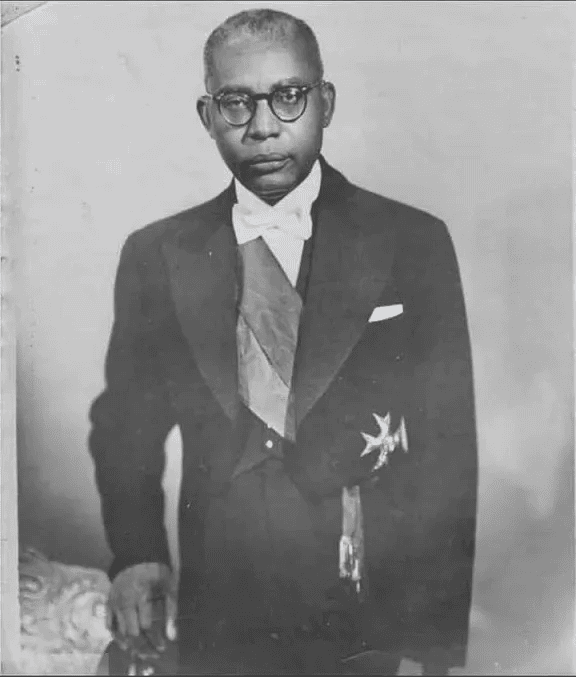
François Duvalier won Haiti’s 1957 presidential election and subsequently consolidated an authoritarian state. His son Jean-Claude Duvalier succeeded him in 1971, extending the family’s rule until 1986.
Read Event →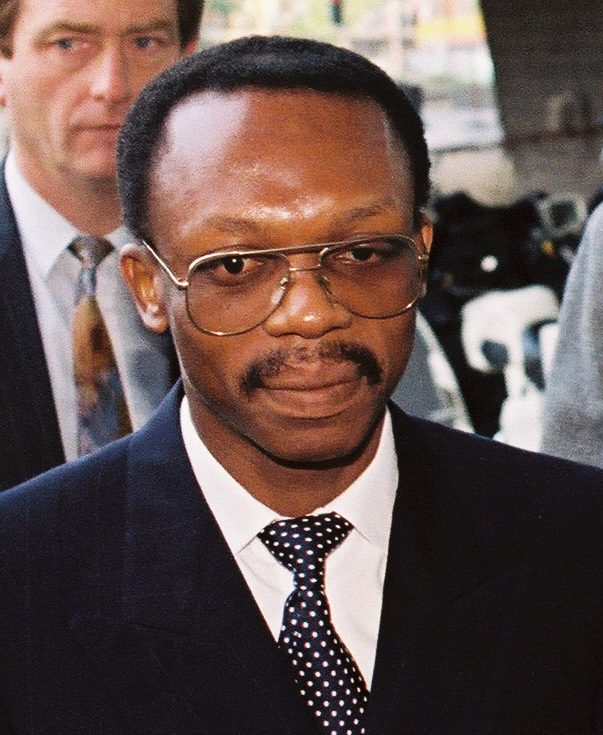
Haiti held a widely observed national election on December 16, 1990. Jean-Bertrand Aristide won the presidency by a large margin after years of unstable political transition following the fall of…
Read Event →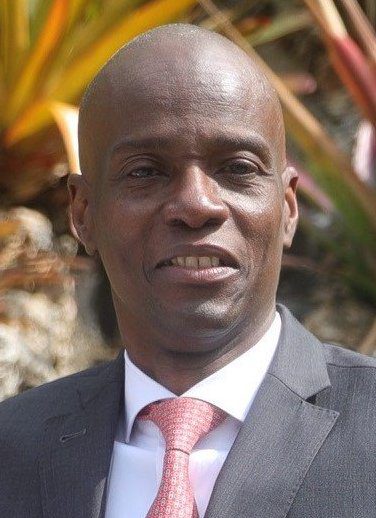
President Jovenel Moïse was assassinated at his residence during the night of July 6–7, 2021, deepening Haiti’s already severe political and institutional crisis.
Read Event →No historical event matched your search.
Continue the Journey
